How to color with watercolor brushes
Light layers, soft edges and a little white paper left alone.

Watercolor rewards patience more than precision. This guide is for anyone who has colored with flat fills and wants softer, more painterly pages: by the end you will know how to plan the lightest areas, build color in layers and keep the paper working for you.
Start with the lightest color
Watercolor is transparent, so a light color laid over a dark one disappears. Before you touch the page, look at it and decide where the light falls. Those areas get the palest wash first, or nothing at all.
Lay the first wash across larger shapes in one movement. It is fine if it looks too pale: the next layers will deepen it.
Build color in layers
Each new layer goes over the one before and darkens it a little. Three thin layers look richer than one heavy one, and they leave you room to change your mind.


Leave some paper white
The white of the paper is the brightest color you have. A highlight on an eye, the edge of a petal or the rim of a cup will look more alive if you simply leave it untouched.
The white you leave is part of the painting.
Choose a small palette
Five colors that sit well together are easier to manage than twenty. Pick one or two to carry most of the page and use the rest as accents.
- #C394E6
- #F1ADCC
- #FEADC5
- #D39DE1
- #A49EFB
When you want to practice, a page with many small shapes is a good place to try layering:
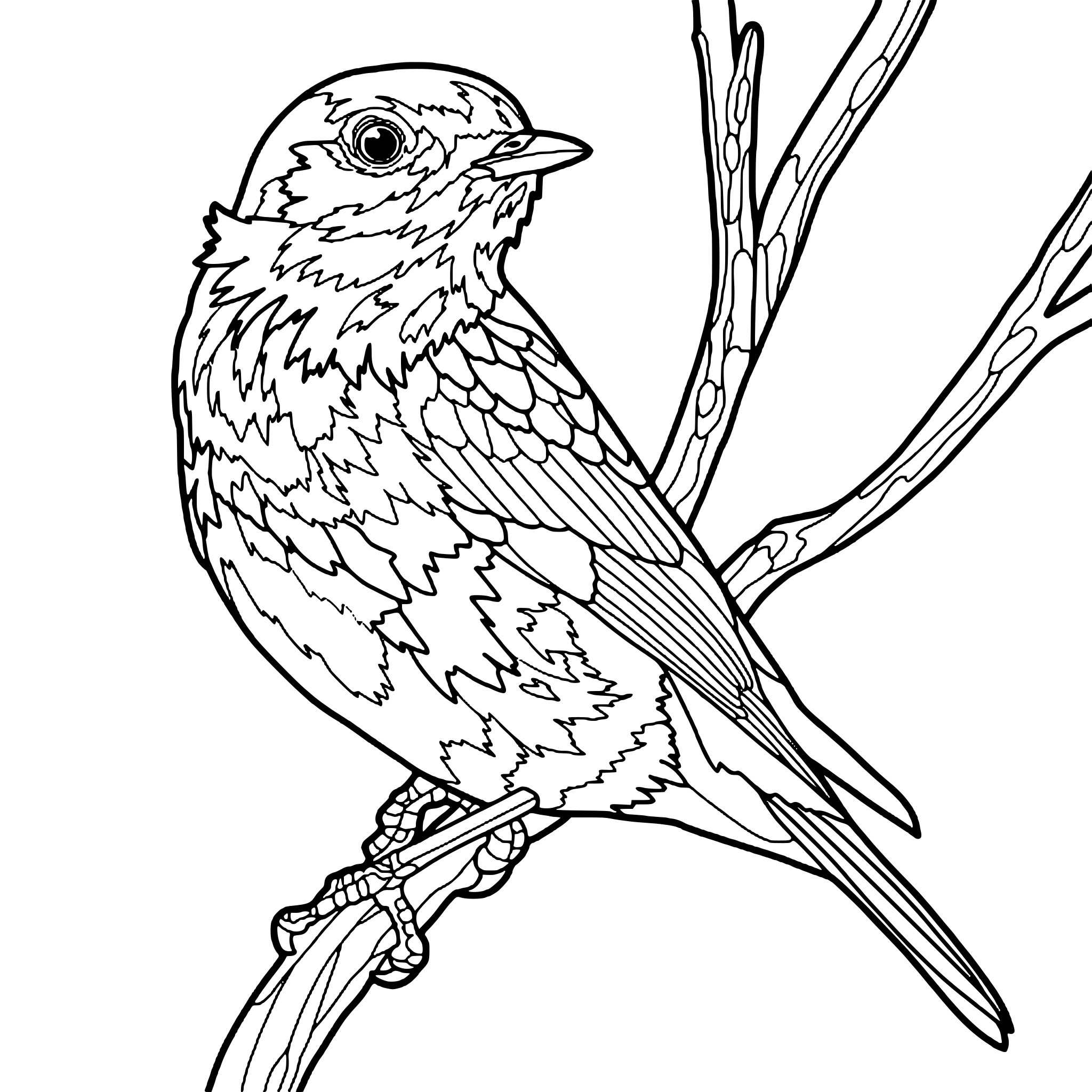 Free coloring pageBird on a branch coloring pageDownload PDF or color it in Linea →
Practice on your own drawing
Take a photo of a sketch and Linea turns it into a page you can fill.